
Write About A Time When ...

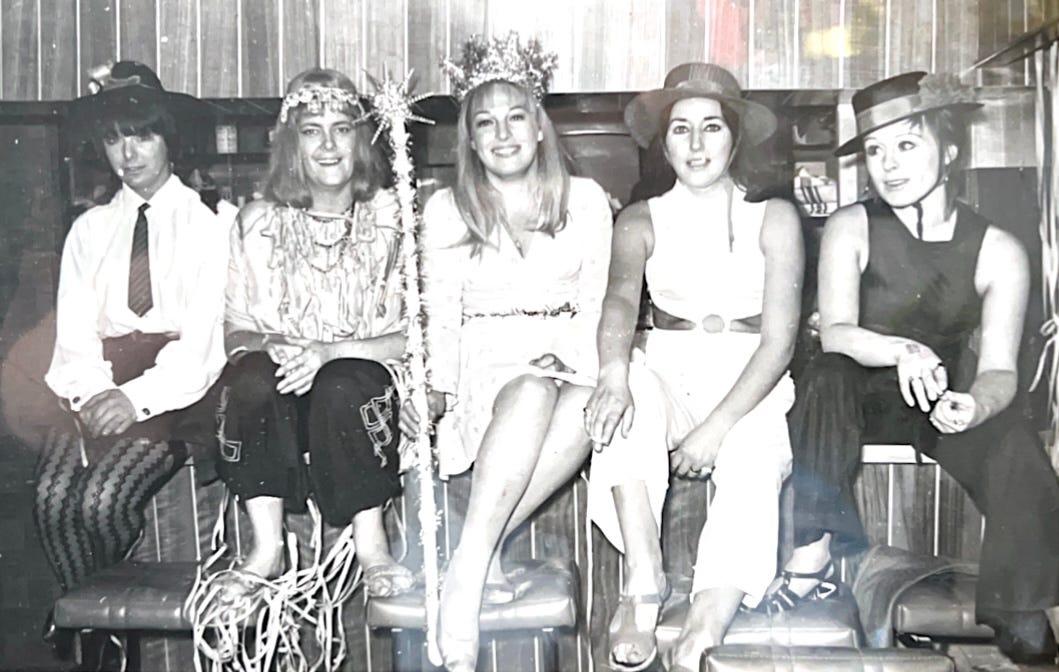
(Left to right - Sue, Marg, My Mum, Maria, Hard-Faced Carol - Ibiza 1972)
It was my daughter’s silence which shocked me.
I have too many feelings, but the net which holds them all is loss.
For months, I’ve been typing up my mother’s autobiography. She’d spent 6 years stubbornly refusing to finish it, writing, rewriting, crossing out and starting again - and then over 50 years of smoking tried to kill her.
In the end she chose an operation with a 50% chance of success, because the alternative was pain. She might have lived, but the after-care in hospital swayed things. It had been the same with my father. Both of them lost.
We get on with our lives, don’t we? But here, typing an hour every day in the company of my mother, she’s back to life. Her telephone voice is here, enunciating, the language overblown. Her memories, unbelievably detailed, stubbornly refuse to get to the point. Or, with a sudden smack of surprise, they do.
This is where the shocks live. One of her favourite words is “elan”, which the dictionary defines as “energy, style, and enthusiasm.” She recounts a cycle ride, a trip to the seaside, horse riding, and scrumping - then with the same elan she skates over the abuse. The first shock is the abuse itself. Physical. And sexual. There are at least 5 men so far, at ages 6, at 14, at 18, 20 and 21.
The second shock is my grandmother. My mother spoke out, but was told to be silent, not to destroy the family. That was the first pair of sexual abusers. The second pair are far more complicated. This is the third shock - not just the grooming, the abusers, nor even my grandmother, but the way my mother coped. Her pride in being able to survive and overcome, to let none of it define her, to carry it all off like Rita Hayworth, all red hair and glamour, sophistication and sex appeal. My mother’s elan.
My mother was born in 1934, a time we can only imagine in black and white and her memories are full of colour. The war was horrifying and thrilling. She was bombed and strafed by fighter pilots, and spent 6 months out of school, running completely free, innocent and wild before returning for dinner and the bomb shelter. But after the war, her world gets closer and closer to our own, history shoving us forward to a more familiar future, whether we are ready or not.
In the 50s, at 21, she tried to divorce the love of her life, Colin. He threatened her with a gun. He beat her. She miscarried. Everything came out in court - he confessed everything. But, he proved to the court he loved her. His lawyer forced her to read out her letters: they proved she loved him. And, achingly, she always did. The judge was bound by the law: “for better or for worse” included a husband beating his wife. That was marital relations. What more could a woman expect? So, no divorce. They would have to separate for 7 years before the court could grant it. Unless her husband did, out of the kindness of his heart.
In her last years she got back in touch with him, a shock I had put behind me 10 years ago when she died. Her written instructions were brief and partial, but she left a list of who to phone, who would need to know. And Colin was on it, with the instructions to hang up if his wife answered - protecting him to the end. The coward didn’t come to the funeral.
My mother had told me about the abuse, of course she had. She shared everything. Too much for me as a child, I thought. No subject was off limits, it seemed. But two pads of her writing are missing, packed somewhere. The ages of 15 to 20. What I know is not the full story. That feeling of loss again.
I’m telling my sister this, because I’m going to invite her to help me finish the autobiography. The pages will run out before the casino heist, the jewellery heist, the move to Ibiza, the mercenary, the bank robber, my father losing everything on a card game, the affairs, fleeing to Canada as illegal immigrants, my father’s mysterious return, deportation, becoming a property developer and losing it again, taking a female lover for 30 years … the chaos and fascination of her life. Her silence about these things, her stubborn refusal to get to them, is an accident of her character. The need to polish - to carry everything off with elan, rewriting obsessively as she went, simply robbed her of time.
So my sister and I discuss the missing pads. She tells me of the abuse she knows is there. So I learn that the detail I remember is sanitised. My sister has much fuller, much more complicated stories. My mother had shared everything, but not with me. Men’s feelings, her life had taught her, need to be spared.
This is what shocked me most. This is who I have become. I spare my own feelings - the sensational headlines and statistics in newspapers artificially increased. Rape counted in the same figures as sexual comments. It feels like an attempt to value women’s experience, to shine a blazing light on the casual and deliberate cruelty of men.
But it isn’t real, is it? Sexual violence and physical beatings on one end of the scale are appalling, but then get artificially grouped with unwanted sexual advances and inappropriate comments at the other end. Lumping them together is like grouping cancer and the common cold together because they both make you feel unwell. One will affect the rest of your life or kill you, the other inconvenience you for a short time, easily forgotten. So, I spare my own feelings this way. Unreliable data.
I look for UK data - are sexual violence, rape and physical beatings a terrible undercurrent, carried out by a few, or an increasing tide, a growing number of men knowing they will get away with it? It’s hard to find reliable data.
Everyone has their own version of the truth.
My sister’s truth is that most men (not 51%-most, but 90%-most) will abuse a woman if nobody is looking. Look at the Taliban she says. This is what happens when society devolves all power to men. All of her friends have experienced an astonishing range of abuse. I counter that this is the past, another country. What about the last 20 years? She is satisfyingly silent on this. No reliable data.
But I have a 29 year old daughter. She WhatsApps from New Zealand, our faces thrown half way across the world. If there’s a problem, she talks to me. We are both optimists, given the choice. She chooses me because I’m detached enough to see things from many sides, and I don’t judge her - we have a long history of confessions and solutions. It’s a rare problem we do not solve together, and she leaves the calls feeling lighter, or armed against the world.
We talk about the family. I tell her a little about the autobiography - not too detailed - as my mum wrote it for her, and I want her to experience it as a story, when it’s done.
I tell her about my sister’s truth, a spiral of doomscrolling social media: her pessimistic numbers. And then I ask her, about her life, and her friends.
It’s her silence that shocks me.
She wants to spare my feelings. It’s not that she’s hiding something terrible that’s happened to her. It’s that to women her age everything’s happening, to all of them, some it all the time.
She wants me to feel lighter. She doesn’t want to tell me about the real world.
And that’s where I’m sitting, in my sunlit kitchen, the designer chair and a forest of pot plants cocooning me in autumn’s colours, cradled in a net of feelings which knit together like loss.
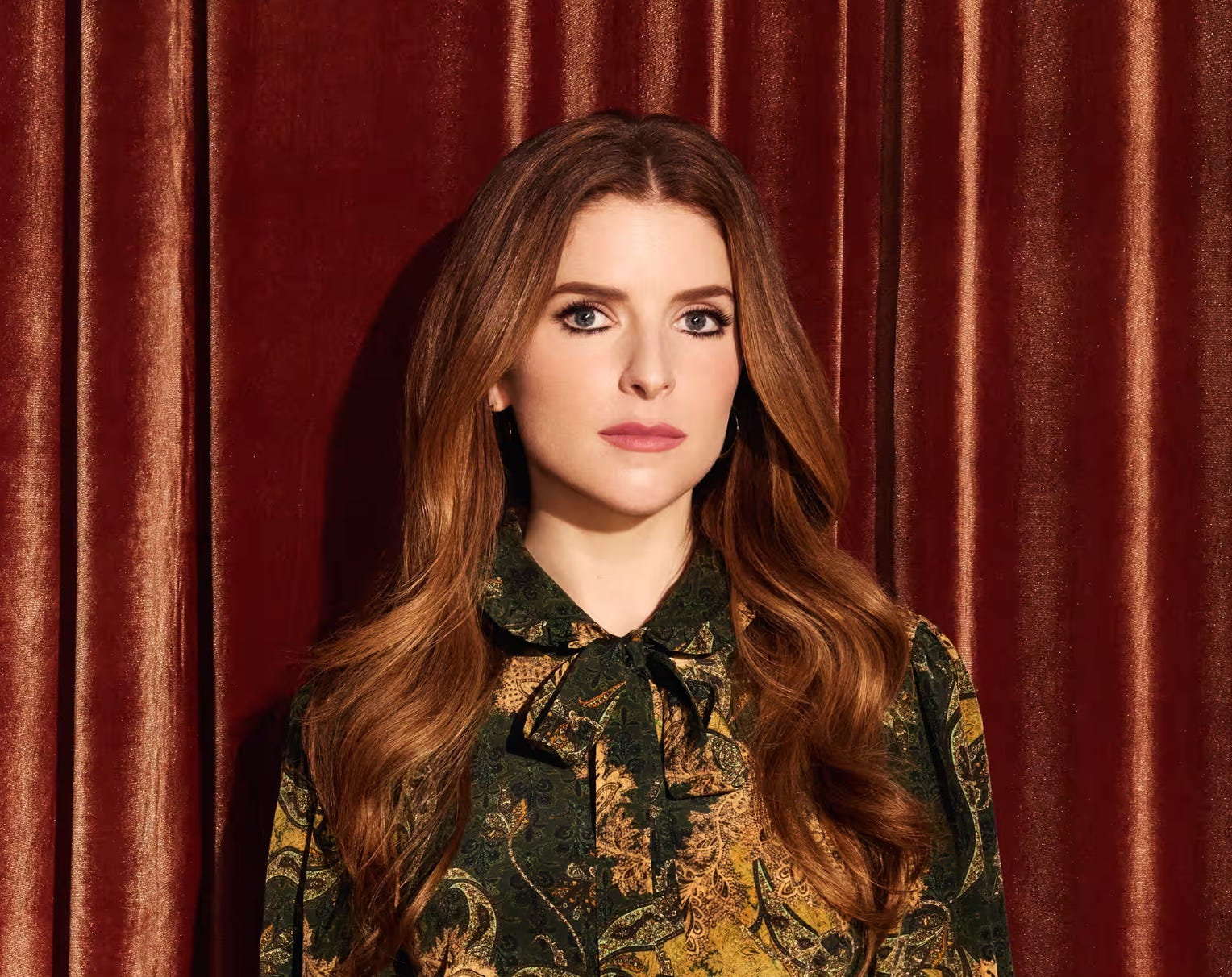
If you are thinking about whether good men aren’t living in the real world, you will enjoy this article: It feels very personal’: Anna Kendrick.
In tomorrow’s post, I’ll analyse this as a piece of grade 9 writing for my paid subscribers.